As recounted by David Dahl
An Airport Encounter and a Red Cape
In 1963, two years after the completion of the Space Needle, I was a graduate student at the University of Washington in Seattle. Having encountered my first mechanical action organ in June of 1960, I had quickly become a devoted tracker organ missionary. As a member of the Seattle chapter of the American Guild of Organists (AGO), I was asked to host a visiting recitalist. I soon learned my responsibility was to pick up Virgil Fox at the airport and bring him to the Meany Hotel. Fox was, of course, a renowned and flamboyant performer famous for his theatrical handling of large electropneumatic instruments.
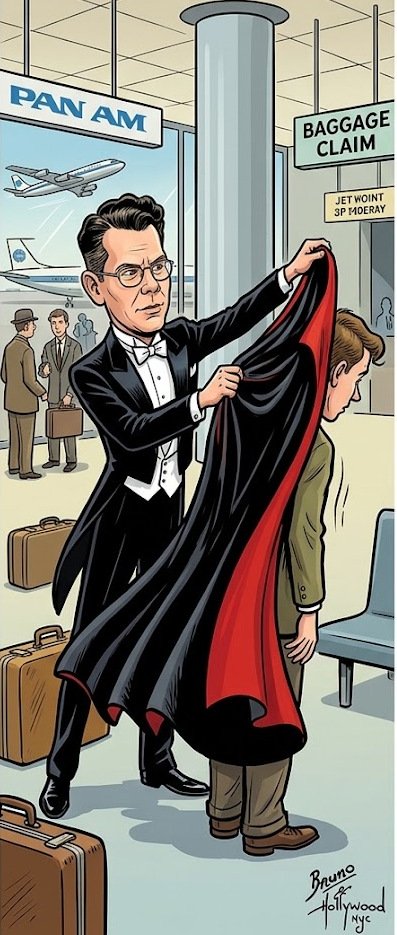
When I met him at the airport and offered to take care of his travel needs, he greeted me warmly: “Well, what a delight to meet you. And now, young man, I would like to place my cape on you and ask you to twirl around in a circle so I can see you from all sides.” He proceeded to drape his red cape over my shoulders. I complied, returning the cape as soon as I politely could.
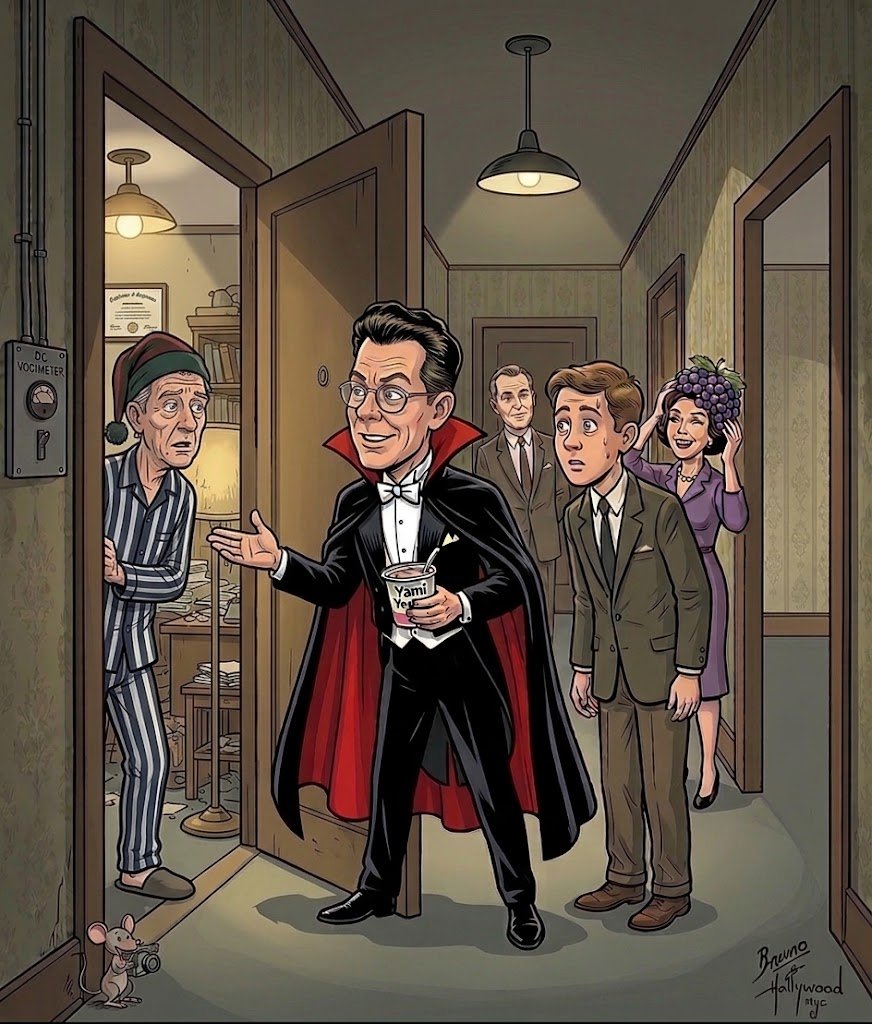
Once in the car, his first request was direct: “Find a store where I can purchase Yami Yogurt.” After locating the yogurt and heading toward his hotel, I asked if he had played any tracker organs on his tour. He turned to me and asked with dramatic emphasis, “So you’re one of those trrrr-ACK-er backers?”
He continued in a teasing manner: “I suppose when you play the Bach ‘Alle Menschen müssen sterben’, you use a Krummhorn 8′ accompanied by a Gedackt 8′ and a Subbass 16′ and 8′ in the pedal. Just you wait, honey, to see what I do with that piece.” Indeed, during his recital, he employed a highly colorful registration using different sounds across four enclosed divisions.
Before dropping him off, I asked if he would be interested in visiting a newly installed tracker organ in Seattle. “Okay, let’s do that after the recital,” he agreed. I arranged with the church’s organist, Elliott Brock, for us to visit around 10:30 PM.
An Intermission in Boxer Shorts
Virgil’s recital was set for the all-enclosed, four-manual Kimball organ at University Temple Methodist Church. Located just four blocks from his hotel, he decided to walk. He requested that three floodlights be installed behind his back so his silhouette would project onto the ceiling as he played. Before his grand entrance, he asked that I check on him during intermission.
The program featured Franck’s Grande Pièce Symphonique and Prière du Christ montant vers son Père (“Prayer of Christ Ascending Towards His Father”) from Messiaen’s L’Ascension. The Messiaen crescendos at the end to simulate Christ leaving Earth for heaven—an effect Fox realized brilliantly using all four swell boxes.
Dutifully, at intermission, I went downstairs to check on the artist. I found him walking about wearing nothing but boxer shorts patterned with red hearts. He explained simply, “I get hot and sweaty when I play and need to change clothes halfway through.” I wished him good luck on the second half and quickly disappeared back up the stairs.

The Midnight Visit to a “Flying Organ”
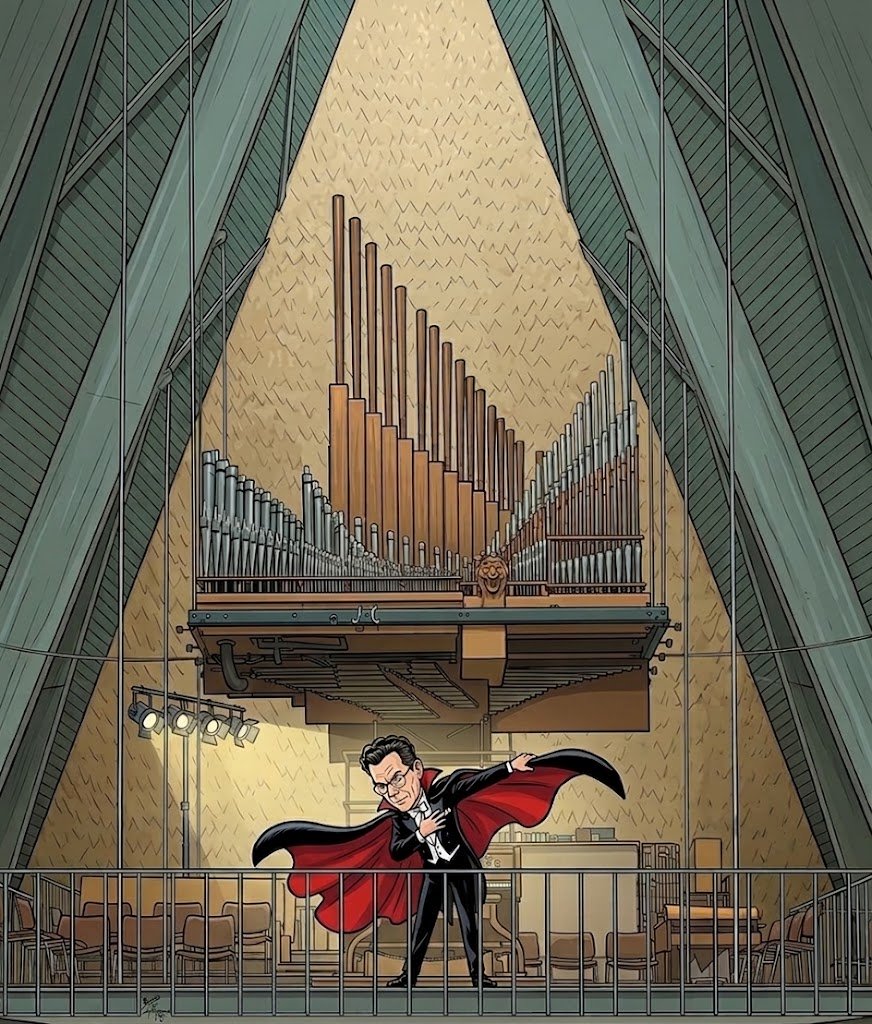
The instrument we were set to visit after the performance had its own unique story. Installed in 1962 at St. Paul’s Episcopal Church by Glenn White in collaboration with the German organ building firm Gebrüder Späth, it was a remarkable creation. The entire organ hung from the ceiling on four steel rods with no case. Stranded steel trackers coated with nylon ran from the top of a keydesk on the balcony floor up into the suspended instrument, designed so the trackers wouldn’t block the line of sight between organist and choir. However, because the front of the gallery was also suspended from the ceiling, having too many adults in the balcony extended the length of the trackers and caused the organ to cipher.
Its stop list was the ultimate expression of the neo-Baroque, remarkable for what it didn’t have: no 8-foot Principal on the Great and no 8-foot stop in the Pedal. It included an electric stop action with two combinations and a crescendo pedal, but no swell pedal since no pipes were enclosed. When Marie-Claire Alain visited in 1965 to see the new Flentrop organ at St. Mark’s Cathedral, she also stopped by St. Paul’s, walked in, turned around, and exclaimed, “It’s a flying organ!”
Specification of the Gebrüder Späth Organ at St. Paul’s Episcopal Church
Organ Specification: St. Paul’s Episcopal Church
Builder: Gebrüder Späth
Year: 1963 (Opus 753)
Action: Mechanical (Tracker) key and stop action
Great (Manual I)
- 8′ Koppelfloete (56 pipes)
- 4′ Principal (56 pipes)
- 4′ Rohrfloete (56 pipes)
- 2′ Flageolet (56 pipes)
- IV Mixture (224 pipes)
- Zimbelstern
Positive (Manual II)
- 8′ Gedacktfloete (56 pipes)
- 4′ Gemshorn (56 pipes)
- 1 1/3′ Larigot (56 pipes) (subsequently moved to the Great)
- II Sesquialtera (112 pipes) (originally a Zimbel, repeated at the octave)
- 8′ Trompete (56 pipes) (replaced the original Spitzgedackt)
- 8′ Krummhorn (56 pipes)
- Tremulant
Pedal
- 16′ Subbass (30 pipes)
- 4′ Choralbass (30 pipes)
- 16′ Fagott (30 pipes)
Couplers & Accessories
- Positive to Great (I/II)
- Great to Pedal (I/P)
- Positive to Pedal (II/P)
- Crescendo pedal with indicator dial
- DC Voltmeter
Following the reception after Virgil’s recital, Glenn White suggested taking Virgil and Julia Kissel to see the new Seattle Opera House on the way to St. Paul’s, using his keys as the sound system manager. Julia—prior to becoming known as the “Queen of Seattle”—was the organist at St. Clement’s Episcopal Church, an active Seattle AGO member, and a devoted host to international organists. I had previously had the pleasure of escorting Julia to the dedication of the St. Mark’s Flentrop organ, where I wore a tuxedo and she wore a spectacular dress by designer Jean Louis made from more than 100 yards of wisteria-colored sheer linen, and a hat featuring clusters of dark red grapes.
Glenn White’s fascination with musical acoustics and instrumentation naturally drew him to the field of sound engineering. For more than two decades, he recorded the performances of the Seattle Youth Symphony—a role that fortuitously provided him with a key to the Opera House. His enthusiasm for organs eventually led to our becoming partners at Olympic Organ Builders. Over the course of his career, Glenn designed and installed nineteen instruments across the Pacific Northwest including the “flying organ” in Seattle.
While Glenn, Julia and Virgil toured the Opera House, I went directly to St. Paul’s to alert the organist that they were on the way. They finally arrived around midnight. By then, the church was dark and organist Elliott Brock had gone to bed in his apartment next door. I suggested we might be too late, but Virgil insisted on knocking. When Elliott answered the door in his pajamas and stocking cap, Virgil bowed deeply and declared: “My name is Fox. We’re here to visit your trrrr-ACK-er organ.” Reluctantly, Elliott opened the church.
A Midnight Recital and a Lasting Legacy
I accompanied Virgil up to the balcony and then returned to the nave to listen. Without a single piece of music, Virgil delivered a flawless, beautifully registered impromptu performance featuring:
- Mozart’s Fantasy in F Minor, K. 608
- Bach’s Prelude and Fugue in A Minor
- Bach’s Trio Sonata No. 6 (first movement)
- Marcel Dupré’s Fugue in G Minor
When he finished, he swung around on the bench and called down to me, “So how do you like THAT on your trrrr-ACK-er organ?”
On the drive back to the hotel, we rode mostly in silence. Virgil never explicitly stated what he thought of the Späth organ, though he had played it as if it were an old, good friend.
While classical organ building has evolved significantly since that time, the Späth organ remains an invaluable piece of musical history. As Seattle’s first “flying” tracker organ—and one of the first of its kind anywhere—it marks a major milestone in local and national organ building. Though it represents an extreme manifestation of the neo-Baroque era and may not align with modern standard ideals, its historical significance and unique voice make it a treasure worth preserving.
Leave a Reply
You must be logged in to post a comment.